Legislators submit bill to make free community college permanent for residents living in San Mateo County


By Ana Mata/Daily Journal
The article below originally appeared in the San Mateo Daily Journal and is being reprinted with permission.


Making free college a permanent program in the San Mateo County Community College District took another big step in the current legislative cycle through Senate Bill 968 that seeks to break cost barriers to education for county residents.

The bill submitted to the state legislature Wednesday is authored by state Sen. Josh Becker, D-Menlo Park, in partnership with assemblymembers Marc Berman, D-Palo Alto, and Diane Papan, D-San Mateo. It’s the first official step in getting the state’s approval to make permanent the successful pilot program that has increased enrollment and opportunity for students. 

“Community college changes lives, and costs should never be a reason that somebody is locked out of opportunity,” Becker said in a press conference held at College of San Mateo Friday. 

Alongside Becker and Papan at the community college campus were district leaders and students who have directly benefited from Free College, a program that waives the state’s mandatory $46 per unit enrollment fee for tuition. 

Board Trustee John Pimentel, an early and major proponent of Free College, said waiving costs for community college tuition is the “most effective and efficient investment that government can make in social equity.” 

“The faculty [in this district] feels great pride in our ability to offer Free College for every San Mateo County resident, including undocumented residents, so they all can enjoy that first rung on the ladder of upward economic mobility,” Pimentel said. 

More than 33,500 students have received support through Free College, and enrollment of local students has increased by 24% since the program was implemented. Over half of the students benefiting are first-generation. 

For Foreign Makahili, a student at Skyline College studying sociology and psychology, “being able to attend college without worrying about tuition changed everything.” 

Makahili went through the foster system and the justice system, and wasn’t sure higher education would be a possibility, let alone an affordable one. That changed when Makahili learned about the district’s program.

“Free College gave me the opportunity to focus on learning, instead of just surviving,” Makahili said. 

Enrolling in college equipped Makahili to find a job, but the impact extends far beyond obtaining a degree and building an income.

“Studying psychology and sociology isn’t just about a career for me, it’s about understanding myself, understanding others and learning how to make better choices,” Makahili said. “I believe when you know better you do better. Free College didn’t just help me enroll in school, it helped me build a new identity.” 

Since fall 2022, the district has piloted a program to gauge the feasibility and success of waiving tuition costs for San Mateo County residents interested in pursuing higher education and obtaining a degree. The pilot was made possible by the authorization of a previous bill, also authored by Becker. 

“This builds on a successful pilot, because that’s what we do here in Silicon Valley,” Becker said. “We try new ideas, we innovate, we pilot them and if it works, we scale it.” 

Making Free College permanent will provide a “stable, predictable pathway” for San Mateo County students and families, Chancellor Melissa Moreno said.

“This moment is not just about legislation, it’s about our students, it’s about opportunity,” Moreno said. “This is a generational impact.” 

Papan said she’s proud to co-author the bill and shepherd it through the legislative process. 

“We are on our way to a tremendously successful permanent program for the prosperity of students in our community,” Papan said. “This represents a permanent promise for not only our students but our community.”

College district may ask for bond extension

Ballot measure, if approved, will be placed for voter consideration in November

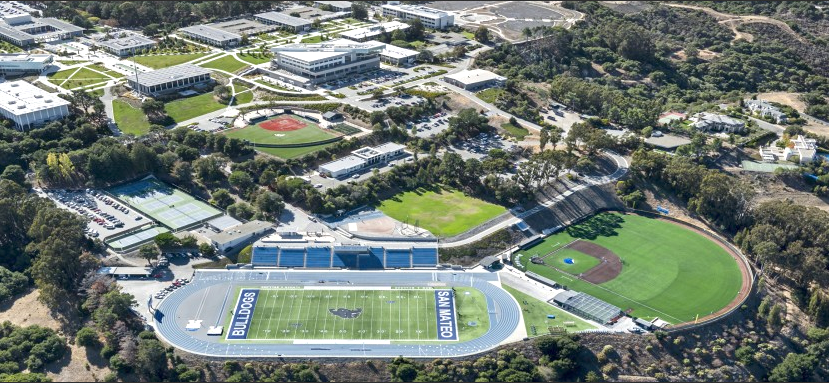
An aerial view of Skyline College.

By Ana Mata/Daily Journal
The article below originally appeared in the San Mateo Daily Journal and is being reprinted with permission.


The San Mateo County Community College District may ask for voter support in November to extend the district’s bond tax rates, which could generate $848 million in total for the district’s facilities needs. 

Though the district’s Board of Trustees have not officially affirmed whether it is moving forward with placing a measure on the ballot, trustees agreed at the recent board meeting Jan. 28, that if so, they’d aim for the November election. 

Like many school districts in San Mateo County, the community college district is weighing its need for adequate revenue to support facility needs against adding another measure to what appears to be becoming a lengthy ballot. However, consultant Dr. Timothy McLarney said a lengthy ballot doesn’t tend to particularly sway voters to pick and choose which tax measures to support.

A polled group of 881 individuals showed significant favorability for a bond measure passing in either June or November. Even after hearing opposing arguments, approximately 64% of polled voters would probably or definitely vote in support of the measure. Bond measures need at least 55% approval to pass. 

Pursuing a November election would simply allow the district more time to communicate with its voters about the reality of the bond extension, McLarney said. 

“I like the idea we’ll have more time to get all our ducks in a row and get our message out,” board President Wayne Lee said. 

The measure is proposed as a bond extension, which would maintain the current rate structure property owners are already paying, rather than asking for an additional tax to consider. This discrepancy will likely improve the chances of the bond measure passing, McLarney said. 

Generating approximately $73 annually, the district would continue levying $18 per $100,000 of assessed property value, if the measure passes.  

The district has, as of late, made decisions regarding the short-, mid- and long-term strategies for financing the next generation of capital improvements. This included a $55 million bridge fund to pay urgent items and a long-term Capital improvement Project savings strategy. To finance capital improvement over the next 10 years, a bond measure will likely be the means. 

An amended facilities master plan identifies $850 million in capital improvement needs. 

To qualify for the November ballots, the Board of Trustees must make a final decision to move forward with a measure likely in July. 

CSM student housing on the way

Community college district awards contract to break ground on districtwide student housing in spring


By Ana Mata/Daily Journal
The article below originally appeared in the San Mateo Daily Journal and is being reprinted with permission.


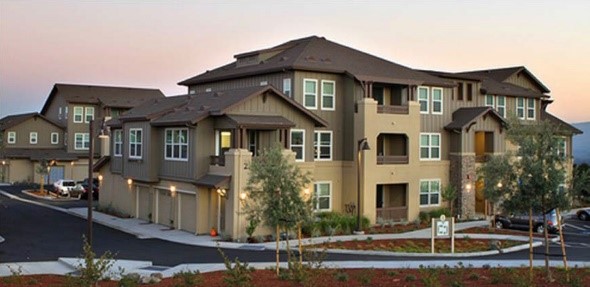
Districtwide student housing at College of San Mateo is inching closer to becoming a reality after the community college district’s Board of Trustees approved a $61.85 million contract with developers who intend to break ground in the spring. 

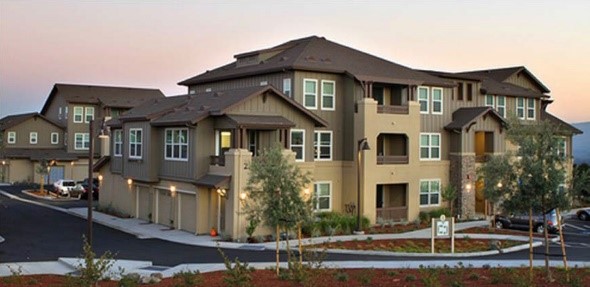
The proposed housing facility will provide 316 beds to first-generation, low-income and housing-insecure students attending any of the three colleges within the San Mateo County Community College District. 

Providing housing is just one of the many wraparound services the district looks to provide its students, board President Wayne Lee said. 

“Our mission is student first,” Lee said. “We find that providing wraparound services helps students graduate, and housing is just one component, a very important one,” Lee said. 

The contract was awarded to BHM Construction LLC, which has experience building university campus housing and proposed a contract for $6.3 million less than the construction cost estimate of $68 million, according to a staff report. 

The district initially requested for state funding in 2023, and earlier this year was awarded just under $56 million to support the design and construction of student housing. The initial proposal proposed 310 beds but was able to increase slightly during the design period, according to a staff report. 

In addition to the state’s funding, sourced by the Statewide Affordable Student Housing Program launched by the state’s community college office in 2022, the district will invest approximately $10 million into the project, according to a staff report. 

At a town hall hosted by state Sen. Josh Becker, D-Menlo Park, on Dec. 9, Chancellor Melissa Moreno said the student housing will provide another level of support that builds on that same mission of the district’s offering of Free College, and making higher education accessible to all. 

“It’s going to allow for many of our students to be able to have a place to live,” Moreno said. “About 70% of students statewide are housing insecure, so this is a real problem, and we’re happy to build housing on our land at CSM to help our districtwide students.” 

Of the 116 community colleges in California, only 16 currently offer on campus student housing. 

The housing units will vary, ranging from semi-suite shared bedrooms to studio and four-bedroom apartments, according to the district. Rents will be affordable, Moreno said, and since the district owns the land it will be built on, the facility will be a “self-supporting program.” 

“The students will benefit from very low rents and we will benefit from having the funding to bring in the supports, and support students in everything they need for their housing experience,” Moreno said. 

Amenities for students are still being finalized, but Moreno said it may include a shuttle service to help students access their campuses if they’re attending Cañada College in Redwood City or Skyline College in San Bruno.

Free college may become permanent in San Mateo County

Josh Becker to introduce bill in new year to make community college free to county residents


By Ana Mata/Daily Journal
The article below originally appeared in the San Mateo Daily Journal and is being reprinted with permission.


Following the success of the San Mateo County Community College District’s Free College pilot, a bill making the initiative a permanent program will be introduced to the California Legislature in the new year. 

Described by Chancellor Melissa Moreno as the single most effective equity initiative the district has and can implement, Free College ensures that county residents have access to higher education by waiving the enrollment fees, and in some cases costs of textbooks, transportation and technology.

Students enrolled in the district’s Free College are three times more likely to complete their educational goals and graduate than their comparable peers, Aaron McVean, vice chancellor of Educational Services and Planning. 

“The impact has been tremendous across all the communities that we serve in this district,” McVean said. 

The district has three campuses, Cañada College in Redwood City, College of San Mateo, and Skyline College in San Bruno. The Free College pilot program was made possible by the authorization of Senate Bill 893, authored by state Sen. Josh Becker, D-Menlo Park. On Tuesday evening, Becker announced he will introduce a bill to make the same initiative permanent during the legislative session beginning January. 

“I’m deeply committed to this program and the students who depend on it,” Becker said. 

District Trustee John Pimentel, a key proponent for free community college, said the program was made possible because the community throughout the county came together. 

The district covers the costs that are waived for qualified students, which Moreno described as a necessary investment. For the 2025-26 school year, the Board of Trustees approved allocating $12.5 million for the Free College expenses. 

“It’s a mission-driven budget line item,” Moreno said. “It’s a decision the Board of Trustees made to align the budget with the mission.” 

The ability for the district to cover the costs of the program is a critical aspect of the potential authorization of Becker’s bill to make it permanent, the state senator said. 

Free College has resulted in a 24% increase in enrollment in the two years it’s been implemented. About 70% of students are supported by Free College, and more than half of those students are first generation students, Moreno said. 

“That modest $46 a unit is actually very much a barrier for our students,” Moreno said. “This has moved the needle more than any other equity initiative that we have tried to get our first generation students coming into the college system in our impacted surrounding communities.” 

The return on investment for students is abundant as well, Skyline President Nate Carter said. 

“It’s one of the single most powerful, effective tools for economic mobility in our region, that’s unquestionable,” Carter said. “It allows families and all walks of life to access higher education in a life transforming way.” 

CSM President Manuel Alejandro Perez described Free College as a “social justice resource.” 

During the town hall, Moreno also announced the district has officially secured $56 million in state funding to develop districtwide student housing on the College of San Mateo campus. At the district’s Board of Trustees meeting Wednesday, trustees are slated to approve a contract to break ground on 314 beds in the spring, Moreno said. 

Reflecting on his time as a trustee on the board, Pimentel said working on the Free College initiative makes him the most proud. He hopes the state will yet again authorize Becker’s bill in the new year, and eventually expand the program beyond San Mateo County. 

“At the end of the day, free community college, I believe, is the most effective, efficient investment that government can make in achieving social equity,” Pimentel said.

Coastside campus celebrates a year

College of San Mateo educational facility in Half Moon Bay sees more than 200 students enroll, offering 9 courses in new year

Half Moon Bay Mayor Joaquin Jimenez celebrates the San Mateo County Community College District opening its College of San Mateo’s Coastside Education Facility alongside, left to right, Trustee Mike Guingona, Chancellor Melissa Moreno, Trustee Lisa Petrides, and Joan Dentler, a representative for state Sen. Josh Becker, D-San Mateo. Ana Mata/Daily Journal

By Ana Mata/Daily Journal
The article below originally appeared in the San Mateo Daily Journal and is being reprinted with permission.


For over a year, the College of San Mateo’s coastside campus has increased access to higher education by bringing the county’s community college district courses to a previously underserved farmworking community burdened by geography. 

The coastside campus opened its doors at 650 Mill St. in October 2024 to bring the lessons from the College of San Mateo to Half Moon Bay and connect its opportunities to families over the hill. 

At a San Mateo County Community College District trustee meeting Nov. 19 held at the Ted Adcock Community Center, Half Moon Bay was on display and celebrated by a slate of speakers reflecting on the past year of growth. 

“When you work on something for several years and you finally see it come to fruition … it makes what we do so worthwhile,” Trustee Lisa Petrides said. 

Without the new campus facility, accessing classes and higher education would be much more difficult for residents living on the coastside without consistent transportation or technology access, Half Moon Bay City Manager Matthew Chidester said. 

“The district doubled down in our community to ensure everyone, including our most vulnerable residents, would have convenient and culturally appropriate support to access education and career development opportunities,” Chidester said. 

In 2025, the coastside campus has already seen a jump in enrollments for courses — 45 new students registered for the spring term and 129 for the fall term. The educational facility is also seeing more than 70% of new students persist and enroll again, Danni Redding Lapuz, CSM acting president of instruction, said. 

“That’s what we’re looking for, that’s how the journey starts,” Lapuz said. 

The campus began offering four courses in spring 2025, and a year later for spring 2026 that will increase to nine. Subjects include art, creative writing, English for multilingual learners, fitness, film, fire technology, management, oceanography and statistics. 

Staff has also hosted 26 registration and financial aid workshops, bilingual services and more than 20 community events to grow the college’s partnership with the numerous organizations working to help residents on the coastside, Alex Guiriba, CSM vice president of Student Services, said. 

“Each event, each partnership and each conversation brings us closer to our goal, to making sure that coastside residents who dream of going to college know that CSM is here for them in their language, in their neighborhood and with the support that they deserve,” Guiriba said. 

One student enrolled in the English course is Patricia Ramirez, a native Spanish speaker looking to enhance her professional vocabulary and communication skills. 

Ramirez is a founding board member of Ayudando Latinos A Soñar, a nonprofit supporting Latino farmworkers and their families. Her enrollment is reflective of the coastside campus’ connection and impact on the community, Dr. Belinda Hernandez-Arriaga, founder of ALAS, said. 

“I’m seeing educational dreams come true, and you’re making it happen,” Hernandez-Arriaga said to the Board of Trustees. 

Looking ahead, the new campus will not only commit itself to Half Moon Bay, but expand connections up and down the coast, with the Cabrillo Unified School District and the Asian American, Native Hawaiian, Pacific Islander farmworker community, CSM President Dr. Manuel Alejandro Pérez said. 

The College of San Mateo’s Undocumented Community Center is also looking to expand its services to the coast. In the spring, the center will offer workshops to Half Moon Bay High School seniors that will help students complete applications to the CSM, residency forms and providing family info sessions, Program Services Coordinator Martin Marquez said. 

The center will also introduce the Unlocking Futures Fellowship Program to the coast, with the first student fellow by fall 2026. The program provides undocumented student opportunities to receive financial incentives, mentorship and career development opportunities, and is offered to a cohort of 19 students across the community college district — up from 13 the year before. 

San Mateo County Supervisor Ray Mueller, whose district represents the coastside, thanked the community college district’s staff for investing in the community. 

“Not every college institution would have done it,” Mueller said. “It is transformative for this coast, it’s transformative for the kids on this coast to know that no matter what, education is within reach.”

Are liberal arts making a comeback?

STEM still dominates; humanities majors see rise

As a child, video essays and explainers on psychology captivated Rio Manuel, and her fascination compelled her to study the science of mind and behavior. After taking an academic break, she reenrolled this fall, hoping to earn a degree in psychology and use her background to facilitate rehabilitation programs for formerly incarcerated individuals. Chris Ceguerra/Daily Journal

By Chris Ceguerra/Daily Journal
The article below originally appeared in the San Mateo Daily Journal and is being reprinted with permission.


Each year, media outlets and higher education think tanks highlight college trends and student behaviors, and the topic of college majors continues to spur discussions among students, families and economic analysts on the future of the job market.

Today’s technologies influence the workforce, and many students gravitate toward STEM-related programs due to their promise of higher entry-level salaries. For some San Mateo County residents, the dream is to work at the forefront of technological innovations for jobs awaiting them in San Francisco and Silicon Valley. 

Many residents and international students enroll in the San Mateo County Community College District to pursue sought-after courses that prepare them for careers in science, technology, engineering and mathematics.

In comparison, liberal arts and humanities students make up only a small portion of total enrollments at local community colleges. At Skyline College, for example, humanities majors represent 3.4% of all 6,379 major declarations in the 2024-25 academic year.

But despite the popularity of these programs, recent student data from the college district reveals a notable increase in enrollment for humanities and liberal arts majors. 

Even in small numbers, students and faculty continue to stress the importance of these disciplines. Rather than focusing on employment-related anxieties, they focus on their classes and navigate how to achieve their personal and wholesome ambitions.

It’s not always about the money

Over the last decade, technology and the emergence of generative AI has led to a decline in job openings for liberal arts and humanities graduates, a concern that many students consider when choosing their field of study.

In recent years, more people have opted out of pursuing the arts and social sciences over fears of employability. The surge of AI has reshaped everyday and professional life, and some companies use its automated or generative capabilities to execute tasks, from prescreening applications to generating content for digital marketing and advertising.

While some educators encourage students to focus on pursuing degrees and careers in lucrative fields, others offer a different perspective on navigating the arts in a wage-based economy. Among them is Emil DeAndreis, a creative writing professor at College of San Mateo, who believes the value of a degree should not be measured solely by financial gain.

For DeAndreis, he learned that most writers still depend on a full-time job to pay the bills. Even after publishing three books, his teaching career allows him to continue his craft. Still, he clarifies that this circumstance should not deter students from pursuing a degree in their respective disciplines.

“There are people, perhaps, who come into creative writing with the aspirations of publishing and making money from that,” DeAndreis said. “But oftentimes it isn’t the money that’s the end goal.”

Apart from their creative pursuits, a group of students defies the popular opinion that they should aim for six-figure starting salaries and remain steadfast in their dedication to community welfare and improvement. For many of them, their reason to pursue these majors with stricter career mobility is personal.

“Psychology can help with multiple aspects in life,” Rio Manuel from Skyline College in San Bruno said. “One example is my father, [who] has been incarcerated before, and I think it would be really good to use psychology as a rehab outlet.”

Some students also choose to pursue liberal arts in pursuit of their passion for causes and beliefs. For criminal justice student Zuleika Larria, The U.S. Immigration and Customs Enforcement raids motivated her to defend the immigrant community.

“I want to help those people who are trying to come here just to live a better lifestyle because we’re lucky enough to live in America as it is,” Larria said, a student at Skyline College. “Why not share that with other people?”

The ability to improve human connection

Some advocates argue that studying the intricate aspects of the liberal arts and humanities is necessary to develop empathy and become more well-rounded citizens. Especially in a multicultural state like California, acquiring cultural competencies can be advantageous, particularly in fields such as health care, social services and business.

California higher education organizations have implemented measures to ensure that college graduates possess the tools and knowledge necessary to navigate diversity. The California State University system requires students to complete six units of arts and humanities and six units of social and behavioral sciences as part of their general education to graduate. Similarly, the requirements for the University of California system vary by campus and its respective colleges. 

The College of Letters and Sciences at the University of California, Berkeley, which houses most of the liberal arts and humanities majors, requires two semesters of world language classes for students to confer their four-year degree, in addition to fulfilling campus requirements in American cultures.

Sarah Harmon, an adjunct professor of linguistics and Spanish at Cañada College in Redwood City, explains that the immediate communities benefit when more people immerse themselves in the humanities. 

“You have to study humanities and you have to study social sciences for you to relate to other human beings,” Harmon said, who holds a doctorate in linguistics. “It just has to be done.”

The allure of studying languages and cultures varies for students. From her experience teaching at the community college for almost two decades, she had students ranging from 15 to 75 years old taking her class out of interest, as a requirement, or for professional development. 

Free college program

Learning a new language and cultural nuances for community and professional settings are among the goals the college district hopes to provide. In 2022, SMCCCD launched its Free Community College initiative, which opened doors for county residents to enroll in classes at the three local community colleges without incurring tuition fees.

Last year, the initiative led to a significant 24% increase in student enrollment within the college district. Whether students take liberal arts classes as part of their degree out of personal enjoyment, San Mateo County residents could enjoy education at little to no cost. 

“Across the San Mateo County Community College District — Cañada College, College of San Mateo, and Skyline College — we’ve seen an increase in enrollments in subjects such as English, history, and philosophy over the past three years,” a college district representative said in an email, crediting the growth to the success of the Free College Initiative.

Colleges eye bond measure

Community college officials discuss strategies to finance capital improvements at all county campuses

By Ana Mata/Daily Journal
The article below originally appeared in the San Mateo Daily Journal and is being reprinted with permission.

A total of $818 million in facilities improvements has been identified at the San Mateo County Community College District’s three campuses and officials are discussing strategies to pay for them — including a potential ballot measure as soon as next year. 

Over a 10-year period, the district estimates needing $595 million for prioritized capital projects identified in the facilities master plan and $223 million for ongoing scheduled maintenance at campuses, Chancellor Melissa Moreno presented at the Board of Trustees’ recent meeting. 

“Our need is much greater than available funding,” Moreno said.

At a study session in November, the board received an update on its capital improvement needs, much of which include addressing outdated buildings, establishing student housing and making facilities equitable. 

Moreno noted that this is not a proposed project list to advocate for public financing — though such a request may come in 2026. 

At Cañada College, there is an identified $92 million worth in prioritized improvements. Health and safety regulations, compliance with the Americans with Disabilities Act and addressing degrading systems need to be completed at the theater. There is also a request for a more walkable campus considering its topography. 

Around $255 million is identified for improvements at College of San Mateo at four targeted buildings. Health and safety upgrades must be made to the campuses’ gymnasium and its facilities maintenance center. The campus’ library was also identified as needing some slight improvements to correct ADA deficiencies, and the East Hall could use updating. 

At Skyline College, a $290 million price tag is estimated. The performing arts center has foundational issues in need of addressing and the campus’ library is also in need of updating. A significant cost will be going toward the new kinesiology and dance building. 

“It would be very difficult for me to support any measure that does not include an athletic center and kinesiology building at Skyline College,” board President Mike Guingona said. 

At all three campuses, upgrades to fiber, renewable energy technology and wayfinding must be completed, in addition to scheduled maintenance and the plans for new student housing. These items are estimated to cost around $406 million.  

These priorities will require the district to strategically source funds, especially considering the tightening state budget, Moreno said. Still, she said the district can likely account for approximately $150 million from the state, which requires the district to match the dollar amount. 

For the short term, the district has developed a $55 million “bridge fund” to fill any gaps in state funding the district may expect, and the board has been notified of potential private financing options of up to $100 million. 

Mid-term financing efforts will possibly include another general obligation bond potentially for the 2026 ballot, Moreno said. 

With the capital improvements needed in mind, the Board of Trustees approved a contract with consultant Team CivX to poll the possible success of a future bond measure, which will likely be conducted in September. 

Based on the consultant’s findings, a bond measure may be recommended to be placed on the spring or fall ballot in 2026. 

Over the past 20 years, county voters have supported the district by passing three general obligation bond measures — most recently the $388 million Measure Hbond in 2014, which is nearing exhaustion. These bonds helped complete approximately 60% of the district’s identified needs, according to a staff report. 

Moreno said the district’s long-term strategy is to eventually create a self-funded capital improvement project program to stabilize and avoid the need for public financing.

San Mateo County Community College District extends free amenities for students

Balanced budget dedicates around $20M to free college program

By Ana Mata/Daily Journal
The article below originally appeared in the San Mateo Daily Journal and is being reprinted with permission.

The San Mateo County Community College District is working to make college truly freefor county residents — extending the discount beyond tuition and academics to waive parking permits and health care fees. 

For Fiscal Year 2025-26, the community college district has a proposed balanced budget, working with an unrestricted general fund of approximately $279 million, Executive Vice Chancellor Richard Storti said. 

More than $20 million is set aside specifically to fund the district’s free college initiative, the zero cost textbook program, and waiving health service fees and parking permits, aligning with the district’s continued efforts to make access to higher education actually free, Storti said. 

Additionally, $1.29 million is dedicated to the district’s Promise Scholars Program, which provides financial, academic and personalized student services to program participants whose goal is to earn an associate’s degree or certificate, according to a staff report. 

In addition to financial support for academics and associated school fees, the community college district is also developing student housing at its campuses. Currently, the district is focused on plans for a student housing facility at College of San Mateo, with a hopeful move-in date of July 2027. 

The budget currently is accounting for $56 million in funding from the state, and $10 million from the district to construct the housing. There’s an anticipated shortfall of around $20 million due to inflated costs of construction, which the district hopes the state will fund. However, reserves have been set aside by the district that will fill this gap if necessary, Storti said. 

Board Trustee John Pimentel noted that the district’s efforts to maintain appropriate reserves on standby for the housing project will keep the development moving along. 

For the district’s capital improvement program, it is looking at the possibility of private financing for specific projects and may look toward asking voters for a general obligation bond for facilities upgrade, according to a staff report. 

The long-term goal is to develop an ongoing funding stream to self-fund the needed improvements. All unspent site allocations will be restricted to specifically fund future capital improvements. Beginning 2026-27, the district’s resource allocation model will allocate property taxes above $100 million as “excess” for capital funds. 

Another notable capital project underway is the design and permitting of the facility to house a full-day preschool program at Cañada College. Construction is set to begin in December, and will be operating by next fall. 

Jazz on the Hill returns to College of San Mateo

Free live music Saturday, June 7

By Ana Mata/Daily Journal
The article below originally appeared in the San Mateo Daily Journal and is being reprinted with permission.

Atop a grass hill on the College of San Mateo’s campus, two stages will erect next weekend, returning for the beloved, annual daylong celebration of live jazz music.

Free and open to the public, Jazz on the Hill returns 11 a.m. to 6 p.m. Saturday, June 7, with jazz, blues and Latin music performed on two stages. This year, organizers are emphasizing the event as a family affair.

Hosted by KCSM Jazz 91, the 24-hour jazz station operating on the campus, the event is an opportunity for daily radio listeners to come together and not only tune in live but tune in in person.

For Robert Franklin, KCSM’s station manager, the success of the event is because “it’s rich, culturally.”

“Music is the universal language,” Franklin said. “This is an opportunity for families to come and enjoy great music and outstanding musicians from the area.”

Kicking off the festival at 11 a.m. on the main stage will be Skylar Tang, a 19-year-old trumpet player and composer from the Bay Area. Tang has played with renowned musicians — including Larry Vuckovich, who is taking the stage at 3 p.m. — and toured with Carnegie Hall’s National Youth Orchestra Jazz Band, according to her website bio.

Until 6 p.m., performances will flip between the main stage and youth stage, providing a range of instrumentalists, styles and levels of expertise. The youth stage debuted last year and garnered a lot of positive feedback, Franklin said.

This year, performers will include Jazz Education Ensemble, the San Francisco Conservatory of Music, the San Francisco Jazz High School Allstar Combo and the San Jose Jazz High School Allstars.

Part of the value of hosting a youth stage is the effect it might have on young people in the crowd who may be, or aren’t yet, interested in performing live or learning an instrument, Franklin said.

“There’s something about good positive peer pressure,” Franklin said. “When young people see other young people doing things, they become more excited than when perhaps they see an older person do it.”

Another aspect is the ability to provide aspiring musicians a place to experience what it means to perform live for an audience. Jazz on the Hill provides young people a chance to present their art to an audience and get that feel for the connection, Franklin said.

“Before Carnegie Hall or some large international stage, there’s a small stage somewhere in the community where they get their start from,” Franklin said. “Maybe [for] some of those young people, maybe this will be their small stage.”

The night will end with a performance by Afro-Cuban singer Bobi Céspedes, who will perform music that “integrates Cuban folklore and modern elements in an authentic and distinctive sound,” according to her website bio.

Another highlight, Franklin noted, will be Kim Nalley: Three Ladies Sing the Blues.

On-site will also be food trucks, craft booths and organizations from throughout the Bay Area. The event is a serious undertaking and is “an even heavier undertaking financially,” Franklin said, but seeing people come together on the Hill reminds him that “it’s that good work.”

The day after Jazz on the Hill 2025, Franklin and his team will begin planning for the next year. A new effort to fundraise and plan the event will be launched as well. Those in the community interested in becoming involved in “Friends of Jazz on the Hill” will work to increase funding and financial support for the event, Franklin said. More information will be presented at this year’s event.

The goal will remain to provide free, high-quality live jazz to the public for as long as possible, Franklin said, whether attendees are jazz aficionados or have never tuned in to the station before.

“You don’t have to be an aficionado to be inspired by what will be happening on June 7,” Franklin said. “That beautiful sense of community, the coming together of a positive atmosphere, communities coming together — that’s all the hallmarks of a strong community.”

Skyline College gets new president

Search to find permanent leader of the San Bruno college complete

By Ana Mata/Daily Journal
The article below originally appeared in the San Mateo Daily Journal and is being reprinted with permission.

Dr. Nathan Carter will be the new president of Skyline College beginning this summer, ending a multiyear effort to find a permanent replacement for the college’s former president and now district Chancellor Melissa Moreno

Carter was unanimously approved by the San Mateo County Community College District Board of Trustees, as recommended by Moreno, at its meeting April 30. He will begin in his new role July 1, leading the college that serves more than 15,000 students each year on its San Bruno campus.

Before receiving the official confirmation from the board that he would be approved for the new presidential role, Carter spoke of his excitement to return to California and his readiness to “build something great.” 

“From the moment that I first connected with Skyline, I felt this energy, this passion,” Carter said. “There’s a shared purpose in this district and at Skyline that truly moves people.” 

Moreno congratulated Carter at the board meeting, and said he should be proud of “surviving a very long and thorough and competitive selection process.” 

“Please know that you are among exceptional and talented finalists,” Moreno said. “Congratulations to you and we are very much looking forward to you joining this great district.” 

Carter is currently the chief institutional effectiveness and inclusion officer at Northern Virginia Community College, the second-largest community college in the country. Carter attended Sacramento City College before transferring to the University of the Pacific for his bachelor’s degree. He then attended California State University Northridge for his master’s, and earned his doctorate in intercultural communication and rhetoric from Howard University in Washington. 

Carter’s contract is for $283,788 annual salary from July 1, 2025, to June 30, 2028. The San Mateo County Community College District oversees Cañada College in Redwood City, the College of San Mateo and Skyline College in San Bruno.

“Skyline College is on track to reach new heights of excellence under Dr. Carter’s leadership and his uncompromised collaborative and collegial approach,” Moreno said in a press release.